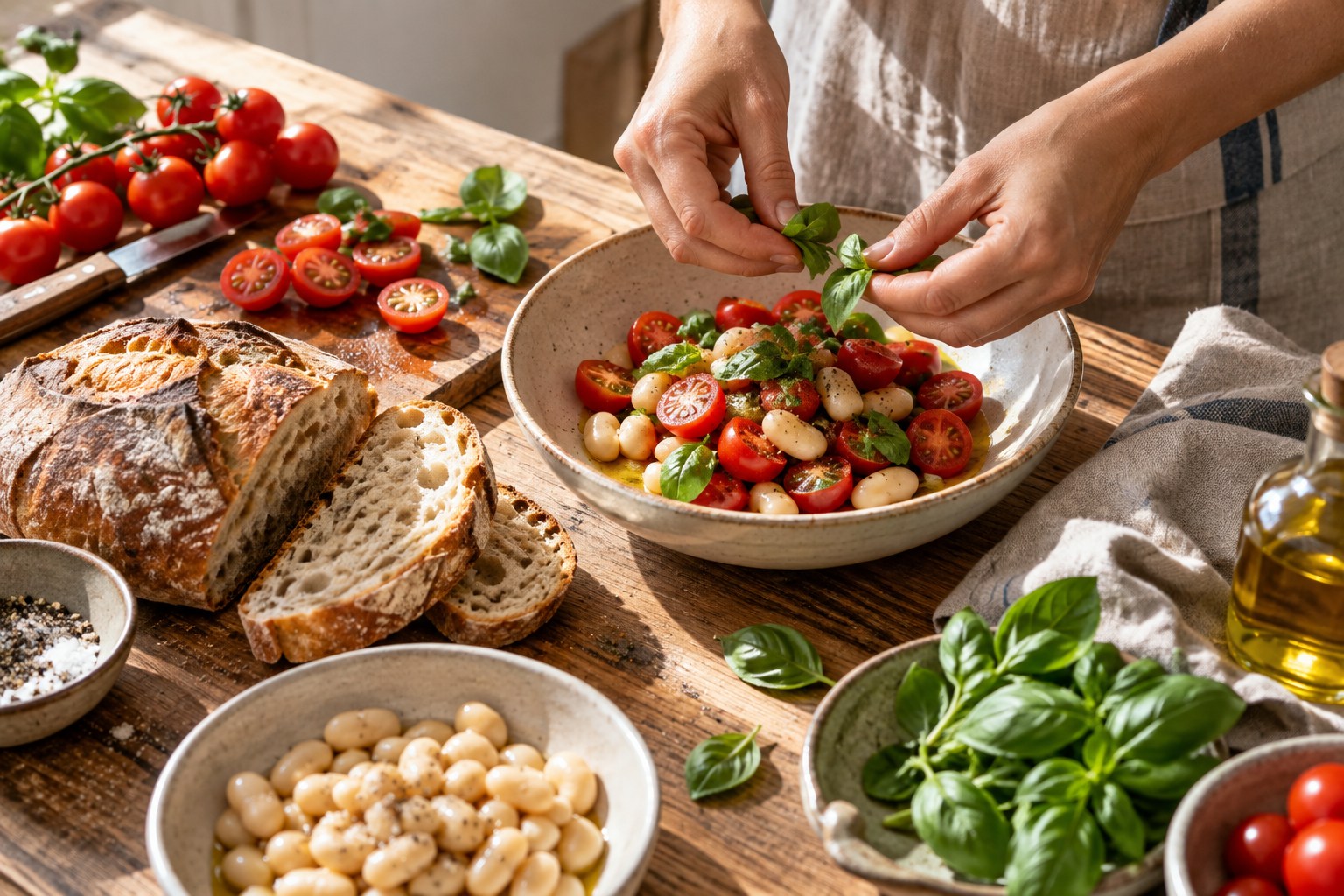
Cooking confidence can begin quietly. You recognize the sound of a gentle sizzle. You know where the colander is before the pasta finishes. You taste a sauce and know what you want to try next. These are learned observations, and you can collect them one meal at a time.
Choose a practice dish you actually want to eat
Pick a short recipe with familiar ingredients and one main cooking method. Simple tomato pasta is a useful practice meal; pretzel ghosts are a playful way to practice melting and dipping. Avoid making your first attempt the centerpiece of an important party.
Read the entire method before shopping. Circle unfamiliar words. Check whether “30 minutes” leaves out chilling, thawing or preheating. Being prepared is a skill, not evidence that you should already know the answer.
Make the kitchen easier to think in
Clear one work area, put a bowl nearby for scraps, and gather tools before turning on heat. Measure ingredients that need to go in quickly. Read the next step while the current one is happening, and keep a timer somewhere you can hear it.
If someone tends to take over, try: “I want to learn this part. Could you talk me through it while I do it?” You can also ask for a quiet kitchen and help with dishes later.
Practice the same dish three times
- First time: follow. Keep the method as written and notice one confusing step.
- Second time: clarify. Resolve that step and repeat the recipe. Set out a tool earlier or lower the heat sooner.
- Third time: personalize. Change one small flavor choice when the recipe allows it. Notice whether you prefer the result.
Changing five things at once makes the result hard to understand. Repetition gives you a reference point. Some days, repeating the same familiar dinner is all the practice you need.
Keep evidence, not a scorecard
After a meal, write three lines: what worked, what surprised me, and what I will do next time. “I drained the pasta before it went soft” is evidence. “I am bad at this” is a verdict that gives you no useful next step.
Use a thermometer and appropriate food-safety guidance where needed. Confidence includes knowing when you need a measurement rather than a guess.
Make room for an ordinary backup dinner
Keep something simple available so a learning attempt does not also become a crisis about what everyone will eat. Toast, a familiar sandwich or a freezer meal can remove the pressure to rescue every experiment.
If the finished plate looks different from the picture, you are still allowed to enjoy it. Read why Pinterest fails belong in the process.