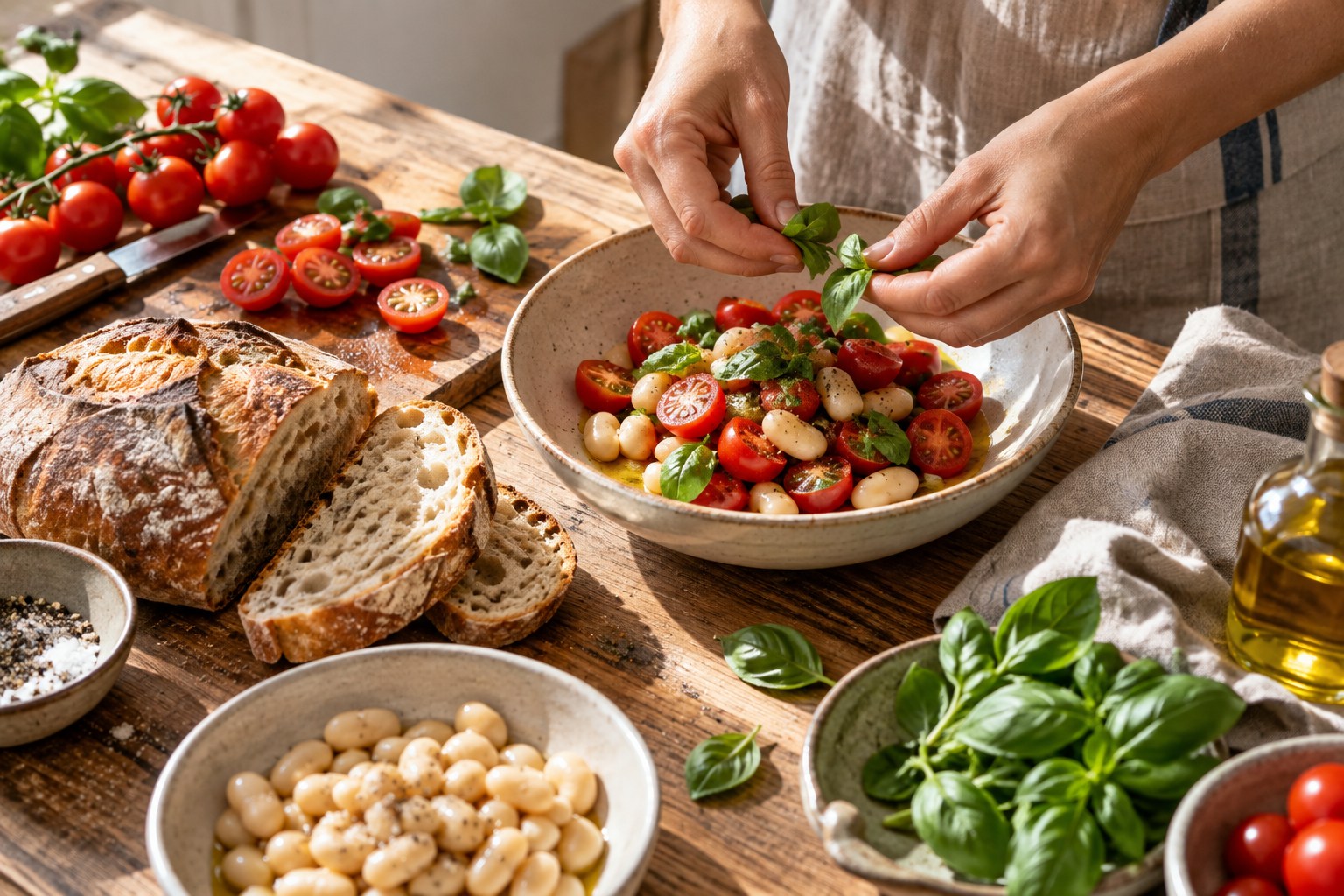
If you search “learn to cook,” you can quickly end up with a long equipment list and twenty open tabs. Close most of them. Your first goal is to make one thing you want to eat, then understand it a little better the next time.
1. Pick a recipe with a small job
Look for a short ingredient list, familiar foods, and one main cooking method. Read the full instructions. If a term is unclear, look it up before turning on the stove. Our first Apron On lesson starts with tomato and white bean toast.
2. Check the equipment before shopping
Match the recipe to what you have. A saucepan is useful for pasta or soup; a skillet serves different jobs. Check the pan size and any required appliance. Borrow a suitable tool when it makes sense. You can build your kit gradually with our tool essentials guide.
3. Gather, wash, and measure
Wash your hands and prepare a clean work area. Rinse produce as appropriate. Gather your ingredients, open containers, and measure what the recipe calls for before applying heat. Keep the recipe visible and your phone away from splash zones.
4. Give yourself a quiet window
Allow extra time for reading, preparing, cooking, and cleaning. A recipe labeled “20 minutes” may take longer the first time. Avoid learning a new skill while you are already very hungry or trying to serve guests at a fixed time.
5. Learn one thing you can repeat
Choose your focus before starting: keeping toast from burning, checking pasta texture, or noticing when garlic becomes fragrant. Use a timer, stay near active cooking, and taste only when ingredients are safe to eat. Consult official safety guidance for cooking temperatures, storage, and leftovers.
6. Leave a note for next time
Write one sentence about what worked and one about what you will change. Repeat the recipe before buying equipment for something more complicated. Familiarity is useful progress.