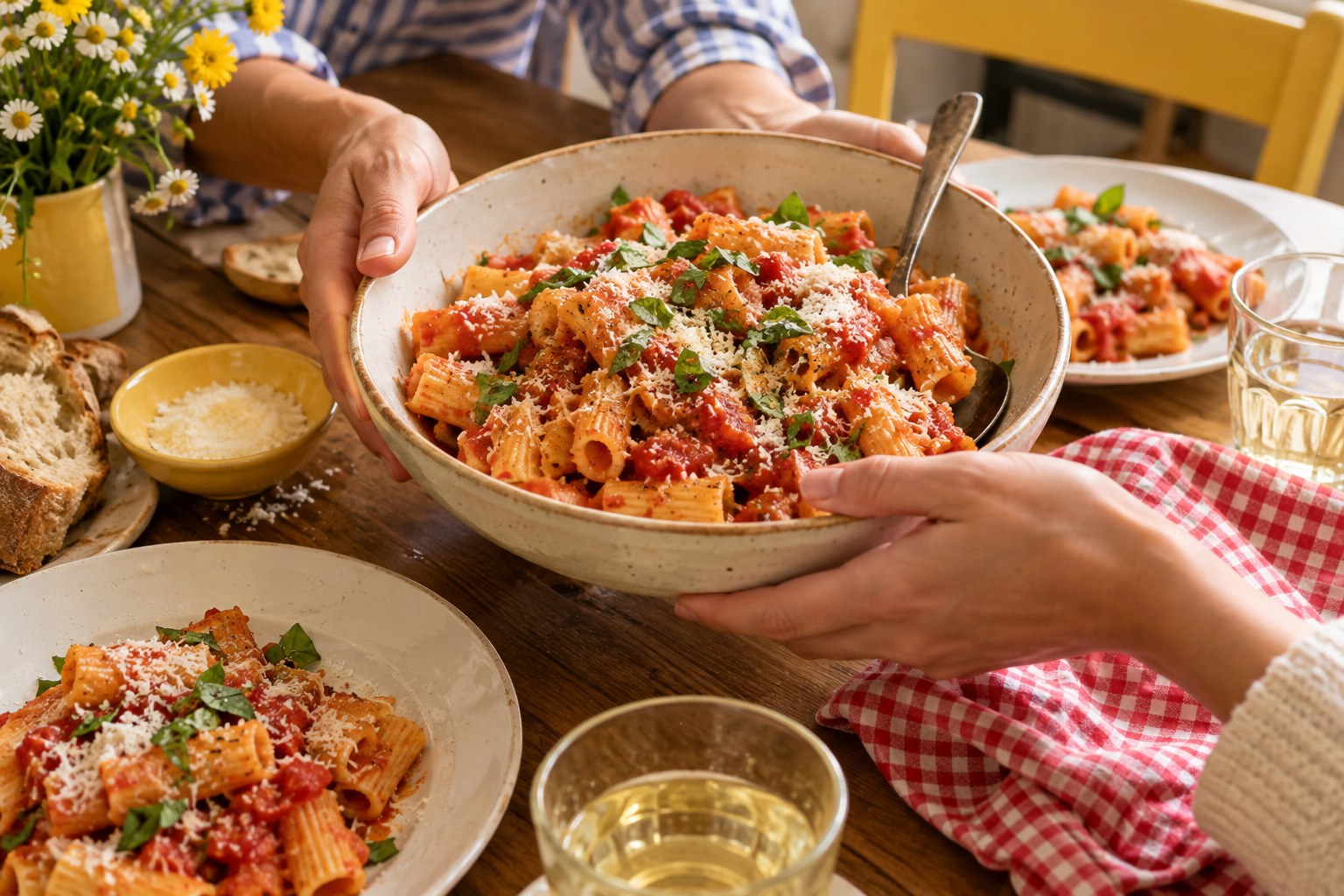
This lesson adds a stovetop skill to your growing kitchen routine. Read every step before beginning. Use the pasta package’s instructions for its cooking time; different shapes and brands vary.
Gather your ingredients
- 160 grams dried pasta
- 1 tablespoon olive oil
- 1 small garlic clove, peeled and finely chopped
- 1 can crushed tomatoes, about 14 ounces / 400 grams
- Salt and black pepper, to taste
- Optional: torn basil and grated Parmesan
Your tools: a pasta pot, a saucepan or deep skillet, a spoon, a heat-safe measuring cup, a colander, a knife, and a cutting board. Use safe grips and take care around steam. Check pasta ingredients for wheat or egg; Parmesan contains milk.
Start with preparation
Chop the garlic, open the tomatoes, measure the pasta, and put your colander securely in the sink. Keep pan handles turned inward and your working area clear. Wash your hands before preparing food.
Cook the sauce
- Place the oil and garlic in the saucepan over medium-low heat. Stir gently until the garlic smells fragrant, roughly 30–60 seconds once it begins to cook. Avoid browning it; lower the heat if it colors quickly.
- Carefully add the tomatoes; hot oil can splatter. Stir, bring to a gentle simmer, then reduce the heat as needed. Small occasional bubbles are your cue, rather than vigorous boiling.
- Cook uncovered for about 10–15 minutes, stirring occasionally, until slightly thickened. If it gets too thick or starts to catch, lower the heat and stir in a little water.
Cook the pasta and bring it together
- Bring a pot of water to a boil and cook the pasta according to the package. If managing two pans feels too much, finish the sauce first and gently rewarm it when the pasta is ready.
- Before draining, carefully reserve a little pasta water in a heat-safe cup. Drain the pasta using your colander, keeping your face and hands away from the steam.
- Stir the drained pasta into the sauce. Add reserved water a tablespoon at a time if needed to help the sauce coat it. Taste a safely cooled bite and adjust the seasoning gradually.
- Serve with basil or Parmesan if you like.
One thing to practice
Notice the difference between a gentle simmer and a rolling boil. Next time, aim for a steady, controlled sauce rather than turning the heat up to finish faster.
If the garlic burns: let the pan cool safely, discard the burnt garlic and oil, and restart that step. Adding tomatoes will not remove the bitter taste.
For handling and storing leftovers, follow official food safety guidance.
An original practice recipe; not independently kitchen-tested. Times are estimates. Ingredient and appliance instructions take precedence where applicable.