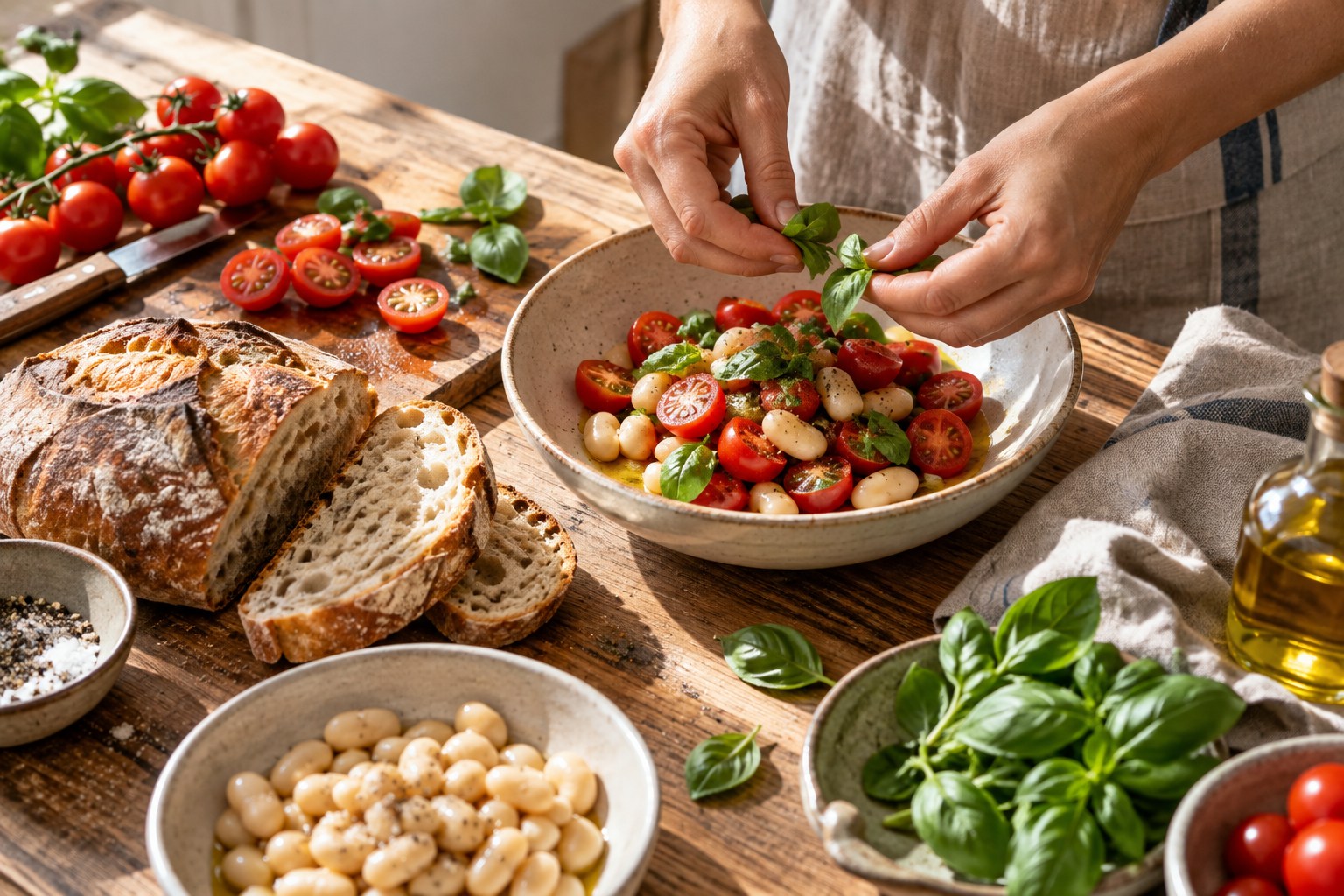
The most memorable part of a winter gathering might be someone declaring that a bowl of soup tastes like “a blanket with excellent boundaries.” That is the spirit of Soup Club: warm food, wonderfully specific descriptions and a reason to sit down together.
Choose a small group and two or three soups you already know how to prepare safely. This is a plan for the evening, not a collection of tested soup recipes. Your familiar recipe, the amount it makes and the available equipment should determine what actually reaches the table.
Pick soups with different personalities
You might choose a smooth vegetable soup, a hearty bean soup and a familiar broth-based option. The exact choices depend on guest preferences and dietary needs. Avoid selecting three difficult recipes that all need the same burner at the last minute. Two reliable soups are more useful than a third that overwhelms the kitchen.
Tell contributing guests the intended serving size, arrival time, complete ingredient-label requirement and how the soup will be transported and held. “Bring soup” leaves too much to guess. Do not accept a dish that cannot be kept safely simply to preserve the original plan.
Plan the bowl size before the shopping trip
Decide whether this is a tasting before another meal or the main meal itself. For an illustrative tasting for eight adults, a half-cup sample of each of three soups means four cups of each soup before allowing for seconds. That is an arithmetic starting point, not a portion recommendation or a recipe yield. Appetites, other food and the recipes themselves will change what you need.
Check that you own enough suitable bowls or cups. A guest can use one bowl and rinse between tastes if the setup works hygienically, or you can provide separate small bowls. Offer bread or another appropriate accompaniment for a meal, but avoid buying a special serving set solely for the party.
Keep it a visible, informed tasting
Name the soups and display the ingredients. This is not a blindfold challenge: people should know what they are eating and be able to decline without explanation. Keep garnishes separate and identified. Use a dedicated serving utensil for each soup and each topping.
Ask about allergies ahead of time and be honest about a shared kitchen’s limits. Labeling and separate spoons do not guarantee that cross-contact has not occurred. A guest bringing a meal they can comfortably eat is participating, not disrupting the theme.
Give everybody a tiny tasting card
Use scrap paper with three prompts: “The cozy description,” “What I notice,” and “Would I make this again?” Invite observations rather than scores. Somebody may notice texture, a familiar herb or the memory of a weekday lunch. Nobody needs culinary vocabulary to belong at the table.
The funny round can assign a fictional personality to each soup: Reliable Friend with Good Advice, Main Character on a Rainy Tuesday or A Very Organized Hug. Avoid best-cook rankings and public complaints about somebody’s contribution. Ask cooks whether they would like feedback before offering technique advice.
Use a serving plan, not an all-evening display
Serve the soups in a defined window, with only the quantities you can handle appropriately. A warming appliance should be capable of maintaining the required temperature and used according to its instructions. Keep electrical leads and hot vessels out of walking routes and away from table edges.
If you are reheating previously cooked soup, use a suitable cooking method and verify the temperature before transferring it to a holding appliance. USDA advises reheating leftovers to 165°F; a slow cooker should not be treated as a shortcut for reheating cold leftovers. Read the USDA leftover guidance for the full process.
Keep the leftovers part small and deliberate
For a buffet, FDA recommends hot holding at 140°F or above and cold holding at 40°F or below. Perishable food left without suitable temperature control for over two hours must be discarded; above 90°F, the limit is one hour. See FDA’s serving guidance.
Do not hand out a pot of soup that has been sitting all evening and call it tomorrow’s lunch. For safe leftovers, use shallow containers and prompt refrigeration within the applicable time limits. Arrange transport and storage before offering take-home portions, and do not pressure people to accept food they cannot keep appropriately.
A relaxed seventy-five-minute version
Allow fifteen minutes to arrive and explain the tasting cards, thirty for eating at an unhurried pace, fifteen for favorite soup personalities and recipe conversations, and fifteen for clearing and proper storage. This is an example schedule. Change it for your actual group, and put food safety ahead of finishing a game round.
Invite the contributors to share a recipe link or a note only if they want to. A printed family recipe can remain private. The evening does not need a public ranking, an album or a new group chat that somebody is expected to manage indefinitely.
The do-less Soup Club
Make one familiar soup, buy the bread and ask friends to bring stories about their favorite comfort food rather than another pot. Keep the playful tasting descriptions and skip the flight. One bowl shared with good company can deliver the same feeling with far less kitchen choreography.
For a broader meal, see our potluck-hosting guide. For another conversation-led gathering, try Bring a Dish, Bring a Story. You can start a tradition at a scale you would genuinely enjoy repeating.
Original event outline, not independently tested recipes or a tested serving schedule. Illustrations do not depict verified results. Food-safety sources reviewed October 9, 2026.