This page contains affiliate links. If you buy through one, My Cooking Era may earn a commission at no extra cost to you. Recommendations include useful tools and optional kitchen treats. How we handle affiliate links. As an Amazon Associate I earn from qualifying purchases.
Friendsgiving does not need a turkey, matching chairs or a particular date. It needs people who know when to arrive, what to bring and whether their dish will have somewhere to land.
Give the menu a little structure
For eight people, assign one main, two hearty sides, a vegetable dish, a salad, bread and dessert. The host can take the main and drinks, but it is also fine to host a soup-and-bread evening or a pasta table. Ask about allergies and dietary needs before assigning dishes, and ensure each guest has something substantial they can eat.
Use one shared list with the dish, cook, serving size, ingredients, arrival time and reheating needs. “Bring a side” can produce five potato dishes; “Bring a vegetable dish for eight that arrives ready to serve” is easier to plan around.
Contribution one: lemony white bean salad
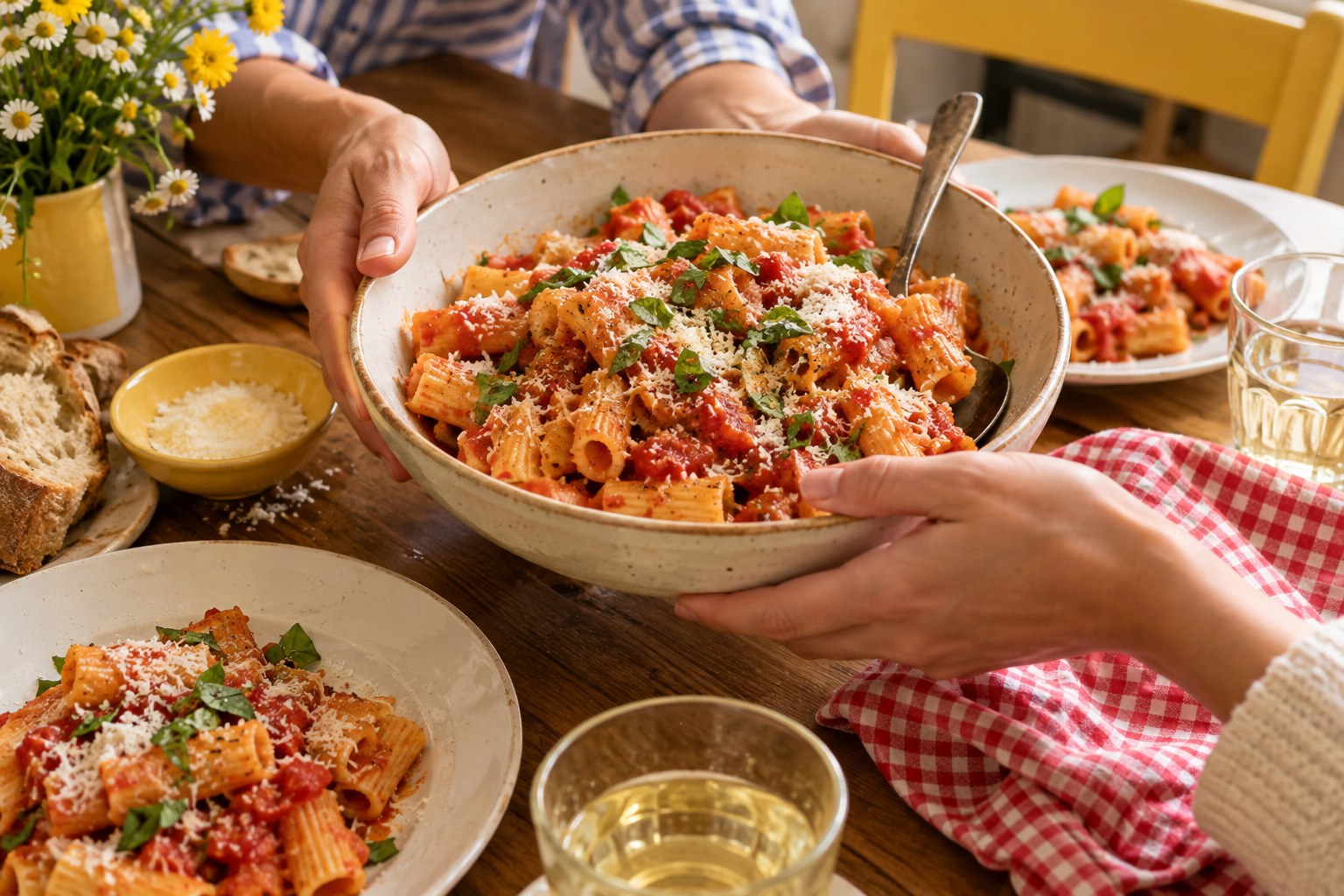
An original practice recipe, not independently kitchen-tested. Times and yields are estimates. Read ingredient labels for allergens and follow appliance and package directions. Images are AI-generated editorial inspiration, not photographs of tested results.
For about eight side servings: drain and rinse three 15-ounce cans of white beans. Combine with 1 diced English cucumber, 1 cup halved cherry tomatoes and 1/4 cup chopped parsley. Whisk 3 tablespoons olive oil, 2 tablespoons lemon juice, 1/2 teaspoon fine salt and 1/4 teaspoon black pepper. Toss, taste, and add a little more lemon if wanted. Refrigerate in a sealed container until departure and carry in an insulated cooler with ice packs. Keep cold at the gathering. Allow about 20 minutes to prepare.
Contribution two: garlic-parsley bread
For about eight portions: heat the oven to 375°F (190°C). Split one 12–16-ounce baguette lengthwise. Mix 4 tablespoons softened butter with 1 small finely grated garlic clove and 1 tablespoon chopped parsley. Spread over the cut surfaces, place on a rimmed tray and bake for about 10–15 minutes, checking for crisp edges and melted butter. Cut into eight or more pieces. Contains wheat and milk unless appropriately substituted; check labels.
If the host’s oven is busy, choose the bean salad or buy bread instead. Do not assume “just ten minutes in the oven” will fit into someone else’s cooking schedule.
Send a clear invitation
Friendsgiving at my place, Saturday at 5. We’ll eat around 6. Please add your dish and ingredients to the shared list, and tell me if it needs an oven or fridge spot. Store-bought is welcome. Let me know about dietary needs before we plan the menu.
Add the actual address, parking details and whether partners or children are included. If sharing costs, agree on that before people shop.
Set up three simple zones
- Drinks: water, nonalcoholic options and glasses away from the stove.
- Food: a serving utensil for every dish and ingredient cards beside them. Separate utensils help, but a shared kitchen cannot guarantee no cross-contact.
- Cleanup: clear places for dishes, rubbish and recycling, plus shallow food-storage containers for leftovers.
Host a meal people can relax into
Start with food that is ready rather than waiting for every late dish. Invite one low-pressure toast or a favorite memory; nobody needs to perform gratitude on demand. Put on music at a level that still allows conversation.
Keep perishable dishes properly hot or cold. Refrigerate within two hours, or one hour above 90°F; discard food held out too long. Use refrigerated leftovers within three to four days. See USDA’s leftover guidance. Ask a friend to help pack leftovers promptly rather than leaving every tray out until the last guest goes.
Need a more traditional menu? Try our Thanksgiving hosting plan. Need an easy dessert contribution? A small platter of dipped shortbread works well beyond December.