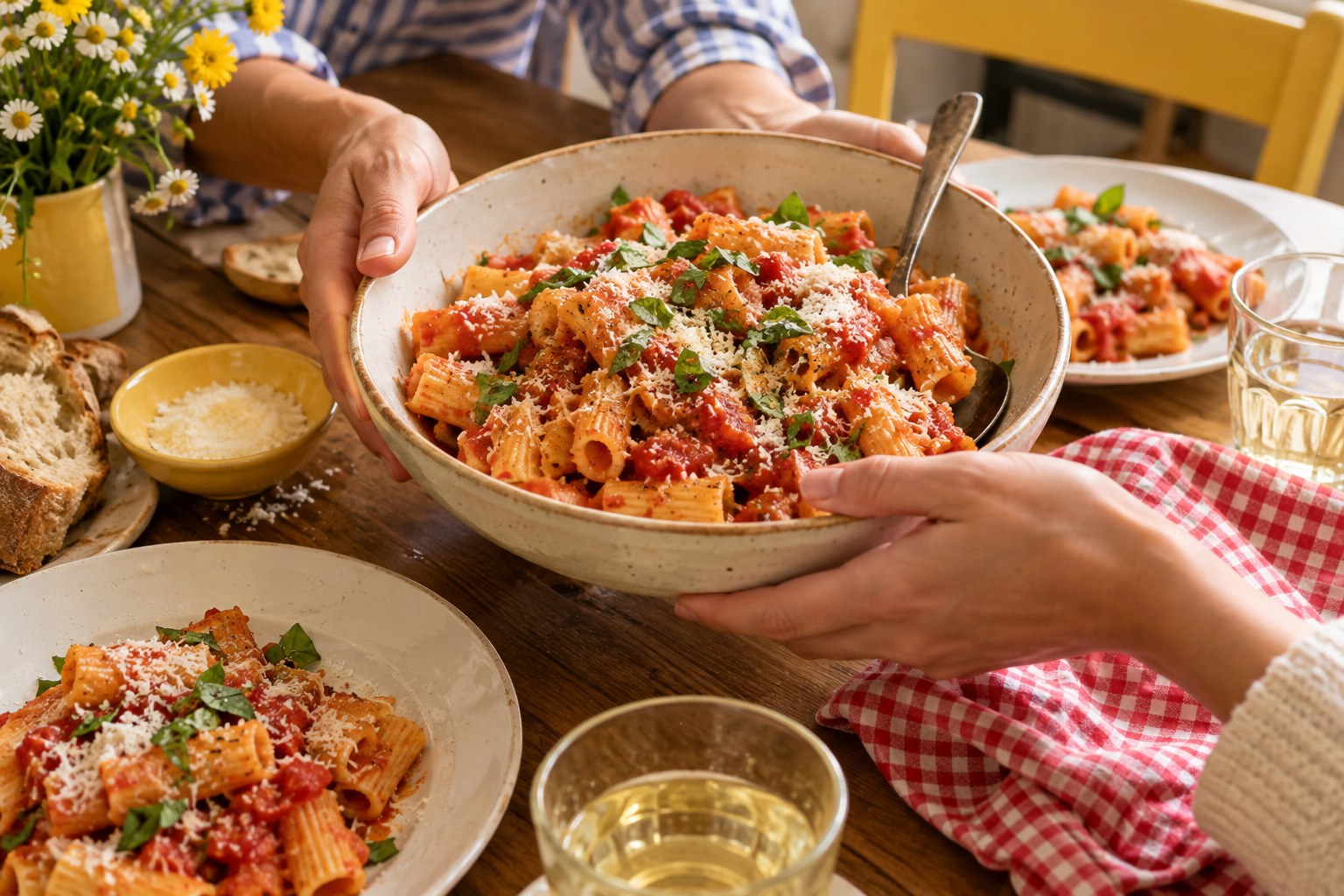
Some food stories begin with a carefully handwritten recipe. Others begin with a frozen pizza after a very long day or a dessert somebody bought and never needed to apologize for. A recipe-story supper makes room for all of them.
Ask a few guests to bring a dish connected to a story they choose to share. Others can bring bread, drinks, a purchased contribution or simply the story. The host gives the menu enough structure to become a meal and keeps the conversation gentle enough that nobody has to audition for the family-cook title.
Coordinate the food before collecting the stories
Ask what each person hopes to bring, how many portions it makes, its ingredients and whether it needs an oven, a refrigerator or a safe hot-holding spot. Choose complementary dishes instead of expecting an unplanned collection to become dinner. The host can fill a gap with something simple.
Use our potluck guide for the practical division of dishes. Agree on costs and contributions beforehand; do not assume that a family recipe is inexpensive or that every guest has time to prepare it. Store-bought food can have a meaningful story too.
Send an invitation with a comfortable escape hatch
Bring a dish, bring a story—or bring yourself. We are sharing food that reminds us of a person, place or ordinary good moment. Please tell me what you would like to contribute before shopping so the menu fits everyone. A purchased dish is welcome, and sharing the story is optional.
Add the actual date, arrival time, serving time and contact details. Ask privately about dietary and access needs. Make clear that nobody needs to provide a recipe or explain why they would rather listen. A gathering should not turn a complicated family memory into a public performance.
Put three prompts beside the plate
Offer a small card with “The dish,” “The person or moment it recalls,” and “One detail I would like to remember.” Guests can write a few words, leave a prompt blank or ask someone to write for them. A childhood cafeteria lunch, a first apartment meal or a shortcut learned last month all count.
Keep accurate ingredient information on a separate card so the sentimental title never hides what is in the food. “Grandma’s something-or-other” is a conversation opener, not an adequate ingredient label for a guest deciding what they can eat.
Give the stories a natural place in the meal
Start eating rather than making everyone wait through a round of speeches. Invite one volunteer to share for a minute, then allow the conversation to move on. A host can ask, “What is the detail you always remember?” rather than “Tell us everything about your family.”
Do not compare versions by asking whether this is as good as a relative’s cooking. A dish can change with the person making it, the ingredients available and the kitchen they have. Curiosity sounds like “What do you enjoy about this version?” Criticism disguised as tradition usually does not improve dinner.
Add a playful menu-name round
Offer an optional second title for each dish: The First-Apartment Pasta, The Nobody-Had-Time Dessert, or The Bread That Saved Dinner. Ask the cook to choose or approve the name. Keep the joke about a situation, not somebody’s skill, body or budget.
Another round can invent a cookbook chapter for the table: Meals Made with the Last Clean Pan, Recipes Worth Calling Home About, or Excellent Things from an Ordinary Tuesday. A few handwritten chapter names are enough; you do not need to design a book before the guests leave.
Capture the useful cooking knowledge with permission
If someone wants to share a recipe, ask about the practical details that make it usable: pan size, oven setting, ingredient quantities, sequence and the texture to look for. Record what they actually tell you. Do not fill missing measurements with confident guesses or claim the recipe is tested because it is old.
A traditional recipe may need current food-handling guidance, especially if it uses raw or lightly cooked ingredients. Choose an appropriate reliable recipe or source before cooking rather than assuming nostalgia establishes safety. A food thermometer and verified directions matter more than a story about how it has always been done.
Keep the serving and storage part organized
Ask a helper to handle the food timeline while you participate in the conversation. Keep a dedicated serving utensil for each dish, name the ingredients and be candid that a shared kitchen cannot guarantee no cross-contact. Guests may decline a dish without answering questions.
FDA guidance calls for cold food at 40°F or below and hot food at 140°F or above. Discard perishables left outside suitable temperature control for more than two hours, or one hour above 90°F. Check the full buffet guidance when planning the meal. Properly managed leftovers need prompt storage, not a place on the table until the last conversation ends.
Make a keepsake that respects the people
Ask each guest whether their note, recipe or photograph may be kept and who may see it. A private envelope of recipe cards is a complete keepsake. Recording someone’s voice or posting a family recipe publicly is a separate decision; being at dinner is not consent to either.
Save the date and one line about the evening. Leave blanks where details are unknown. A truthful, small record is more valuable than an elaborate family cookbook containing invented measurements or polished stories that no longer sound like the people who told them.
The quiet version works, too
Invite one person to make or buy a familiar meal with you. Ask one question, write one note and enjoy the food. No formal potluck is required. For a larger but still relaxed idea, try Soup Club; for a gathering built entirely around volunteered memories, see Holiday Secrets’ memory-mystery evening.
Original hosting and conversation ideas published October 9, 2026. This is not a tested menu or a claim that submitted family recipes have been verified. Food-safety source reviewed October 9, 2026. The image is editorial inspiration.