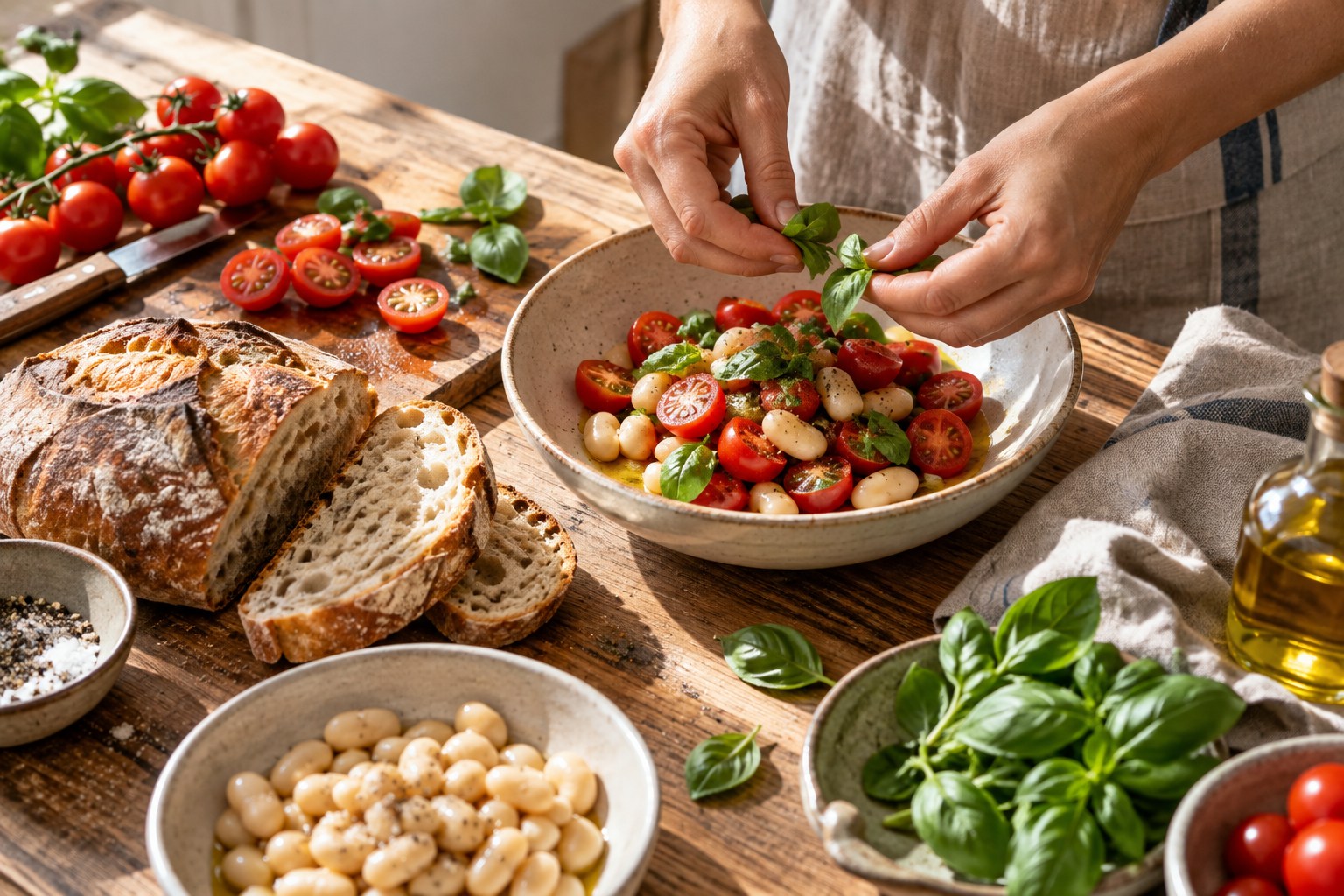
Confident cooks rarely rush. Much of what looks like instinct is preparation: they read the recipe to the end before they turn anything on. You can borrow that habit today.
Read it all the way through, once
Read every line before you gather anything, including the notes at the bottom. That is where recipes hide things like “chill overnight,” “soak the beans first,” or “reserve a cup of pasta water.” Finding those surprises at the counter is what makes cooking feel frantic.
Notice the words that do a lot of work
- “Divided” means the ingredient is used in more than one step. Don’t add it all at once.
- “1 cup walnuts, chopped” means measure, then chop. “1 cup chopped walnuts” means chop, then measure. The amounts differ.
- “To taste” is an invitation to add a little, taste with a clean spoon, and adjust.
- “Until…” phrases (“until golden,” “until softened”) matter more than the minutes listed. Times are estimates; the description is the goal.
Check the whole timeline
Add up the steps, including resting, marinating, preheating, and cooling. A “20-minute” recipe sometimes assumes the oven is already hot and the vegetables are already chopped. Give yourself more time than the recipe suggests, especially the first time.
Gather and measure first
Put out every ingredient and every tool you will need, then measure what you can. Cooks call this mise en place, “everything in its place.” It turns cooking into assembly rather than a scramble, and it shows you right away if something is missing.
Check tools as well as ingredients. A recipe that assumes a specific pan size or a lid you don’t own is worth knowing about before you start. Our kitchen essentials guide covers the basics most beginner recipes expect.
Mark it up
If you printed the recipe, write on it. Circle oven temperatures. Note anything you changed and how it turned out. The second time you cook it, you will be reading your own notes, and that is when it starts to feel like your recipe.
Ready to practice on something small? Try your first kitchen win, then read it through once before you begin.