This page contains affiliate links. If you buy through one, My Cooking Era may earn a commission at no extra cost to you. Recommendations include useful tools and optional kitchen treats. How we handle affiliate links. As an Amazon Associate I earn from qualifying purchases.
Your first guest arrives while you are still deciding where to put the serving spoons. A small board gives them somewhere to gather and something to enjoy while you finish. It does not need to be an elaborate landscape of expensive cheese.
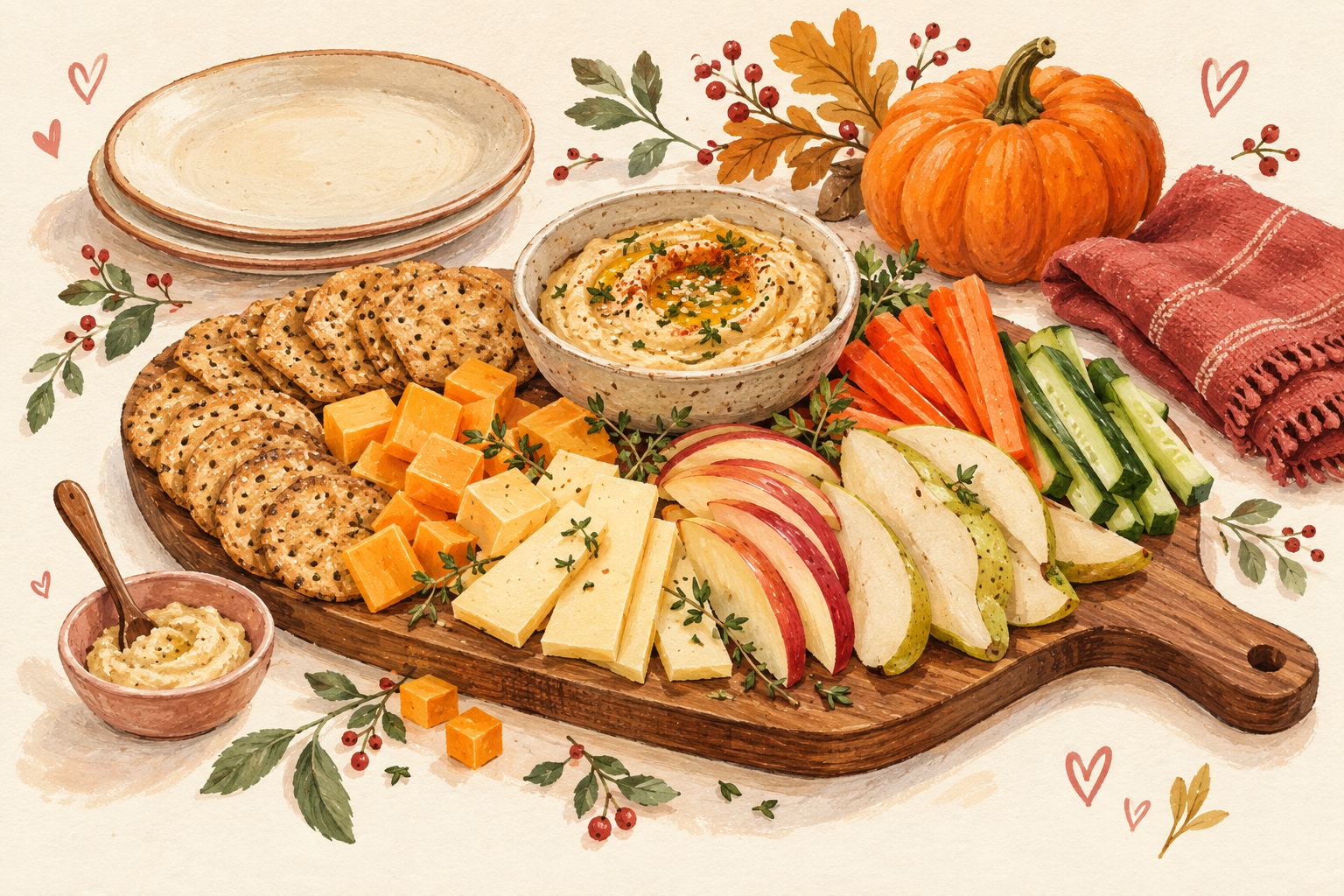
This is a light nibble before a meal for roughly six adults, not a dinner replacement. Appetite, timing and the rest of the menu matter more than an exact photograph. The quantities below are editorial planning estimates, not a tested serving formula.
The little board shopping list
| What | Starting quantity | Why it is here |
|---|---|---|
| Two familiar cheeses | 8 ounces / about 225 g total | One cubed, one sliced; choose pasteurized options |
| Crackers | About 5 ounces / 140 g | A crisp base; keep extras dry |
| Hummus or a prepared dip | One 8-ounce / 225 g tub | A separate bowl with its own spoon |
| Carrot and cucumber sticks | About 3 cups total | Crunch and color |
| Apples and pears | Two pieces of fruit total | Slice close to serving |
Ask about dietary needs before choosing the food. Hummus commonly contains sesame, cheese contains milk, and crackers may contain wheat or other allergens. A separate bowl does not make an item safe from cross-contact in a shared kitchen. Keep original labels available.
Use a plate you already own
A dinner plate and a small dip bowl can look lovely. Two smaller platters are often more useful than one enormous board because you can keep a fresh portion chilled. If you buy a serving piece, choose it for the meals you actually host and the cupboard it must fit in.
Build it in five calm moves
- Make room first. Clear space in the refrigerator for the perishable portions. Wash your hands, utensils and preparation surface. Wash produce under running water before cutting.
- Place the dip bowl. Put the bowl near one edge so people can reach it without leaning over the whole board. Give it a dedicated spoon.
- Add cheese in two small areas. Separate cubes and slices so the board is easy to read. Put out only what you expect people to eat soon; keep the rest refrigerated.
- Add fruit and vegetables. Make short rows or loose clusters with room for tongs. Slice fruit near serving time. A little browning is a texture-and-appearance issue, not a reason to conceal how long food has been out.
- Finish with crackers. Keep them away from wet dip and damp produce. Put extra crackers in a separate bowl rather than stacking the platter precariously high.
The food-safety part of being a good host
Keep cold perishable foods at 40°F or below until serving. Put out small portions and replace the serving dish with a fresh chilled one instead of topping up food that has been sitting out. Track the total time away from refrigeration.
Discard perishables left at room temperature for more than two hours, or more than one hour if the air temperature is above 90°F. A pretty board is not temperature control. See the FDA’s buffet guidance and USDA time-and-temperature guidance.
A welcome that feels like you
Set out napkins, small plates and the words “help yourself.” Put a little pumpkin or a folded cloth beside the food, not among the bites. Avoid inedible decorations touching the board. A warm greeting does more for the mood than filling every gap with garnish.
What comes after the board?
Choose a main dish you have made before, one fresh element and a couple of assigned contributions. Our Friendsgiving potluck plan helps divide the work. The first Thanksgiving guide adds a menu and preparation timeline. If everyone wants to bring dessert, choose a few items together before the table fills with six pies and no dinner.