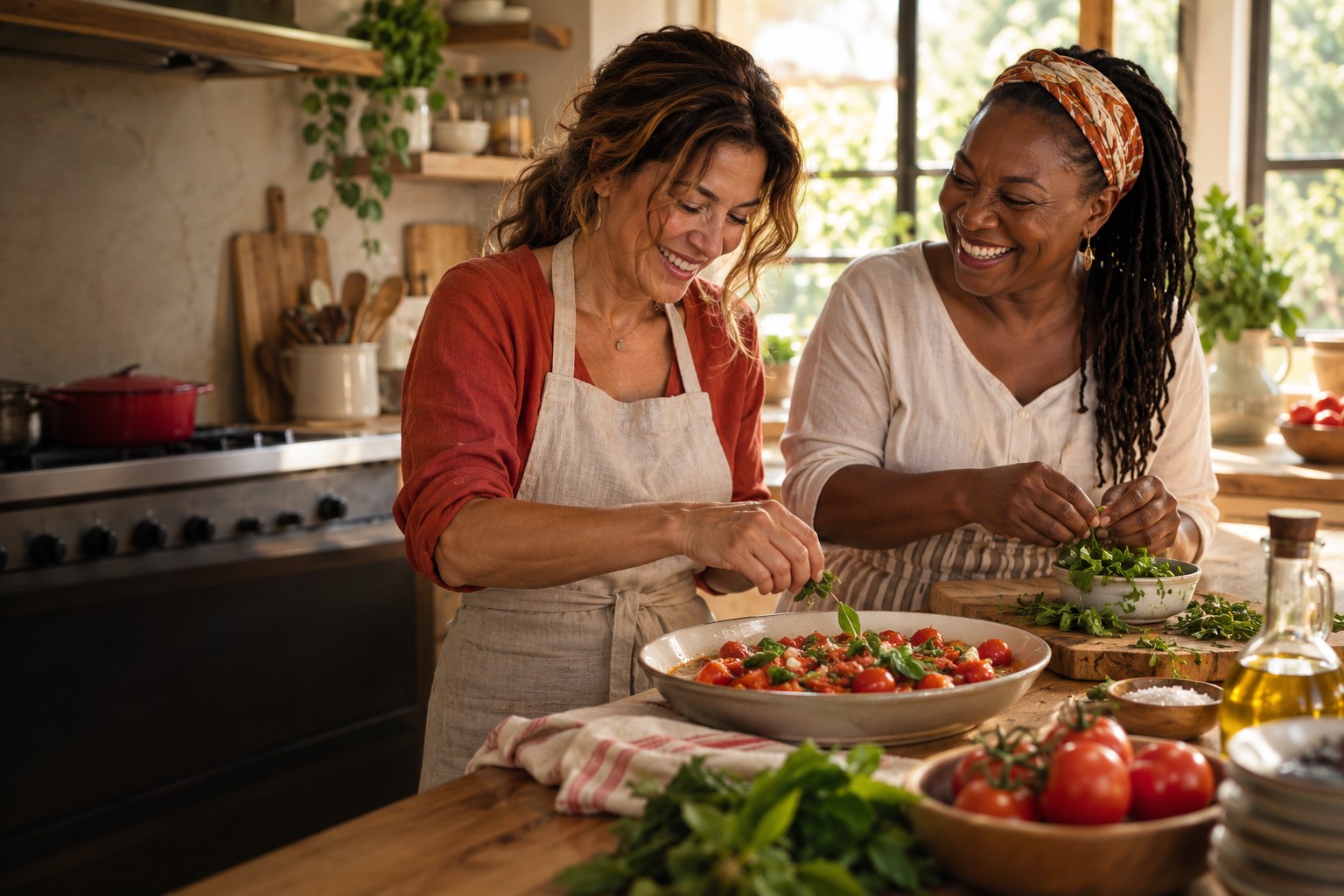
Every family has its kitchen stories. Someone makes the best roast potatoes. Someone always brings dessert. Someone is “the cook.” Those traditions can be lovely, and they can make trying something new feel surprisingly complicated.
You can admire another person’s cooking and still make room for your own. Learning is not a competition for the family title.
Make one corner feel manageable
Clear enough space to work comfortably. Put a stable cutting board on the counter. Bring the tools for your recipe within reach, with sharp blades placed safely away from the edge. Find your oven mitts before anything gets hot.
You do not need to reorganize every cupboard. One clear surface and one readable recipe can be enough for today.
Learn the kitchen you actually have
Check how your stove’s controls work, which pans suit its surface, and where to find the appliance instructions. Learn which handle belongs to the hot pan and keep handles turned inward, away from the edge. Keep towels and packaging away from heat.
Recipe times are guides. Your equipment, portion size, and ingredient temperature affect the result. Follow the method, pay attention, and check doneness using the recipe’s appropriate cues and safety instructions.
Let your preferences matter
Make a short list of meals you genuinely like eating. You do not have to start with an impressive dish, an expensive ingredient, or a food that never appealed to you. Familiar flavors make it easier to recognize what you are aiming for.
Over time, you can learn which herbs you love, how much lemon tastes right to you, and which meals make a weekday easier. Follow a reliable recipe first; experiment as you understand what each ingredient does.
Ask for the kind of help you want
“Can you show me how to hold this knife?” is a useful request. So is “Please give me ten minutes to work this out.” If someone steps in automatically, you can say, “I’m practicing. I’d like to finish this part myself.”
You can learn from a great family cook without copying everything they do. Ask them to explain a detail, measure a usually unmeasured ingredient, or show you the texture they look for. Their knowledge can become an invitation.